A one-day global citizenship camp on 12 September 2026 brought 54 high school students together with facilitators from ten countries.
On Saturday 12 September 2026, Better World ran the first International Understanding and Global Citizenship Camp together with Sejong Campus High School. Fifty-four first- and second-year students took part, along with ten international facilitators from Nigeria, Mongolia, Mexico, Myanmar, Sri Lanka, Switzerland, Ethiopia, Kenya, Tunisia and France.
The theme of the day was the digital education gap, linked to United Nations Sustainable Development Goal 4, Quality Education. In the morning, students compared the Universal Declaration of Human Rights with the Constitution of the Republic of Korea, then studied international organizations and the world system. They also played the World Trade Game, in which countries start with different resources and technology, to see why international cooperation is needed and where it reaches its limits.
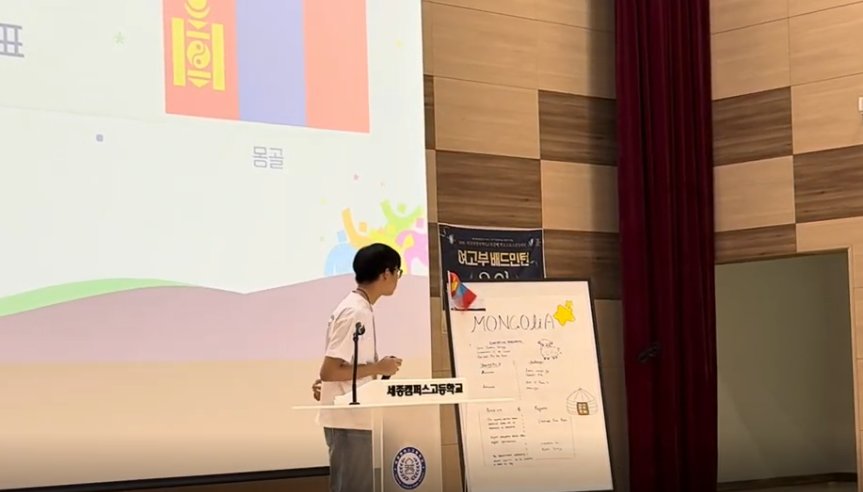
In the afternoon, groups of five or six students and one facilitator each formed the delegation of one country. Students heard from the facilitator about the education environment and social conditions of that country and wrote a position paper in English. The papers were shared in a gallery walk and in presentations by each delegation. The same theme produced different problems and answers: power shortages and nomadic life in Mongolia, infrastructure gaps between regions in Ethiopia, and algorithmic bias and digital safety in Switzerland.
In a survey taken right after the camp, overall satisfaction averaged 4.67 out of 5. The highest-scoring item was "my interest in international issues has grown" at 4.88, and willingness to take part again scored 4.81. In a global citizenship survey given before and after the camp, the overall score rose from 3.81 to 4.31, a change Better World reported as statistically significant. Asked which part was most interesting and taught them most, 48.1 percent of students named the conversations with the facilitators.
One student said they had first thought of the digital education gap as a shortage of devices, and learned during the camp that electricity, distance, culture and teacher capacity are bound up together. Another said that watching the gap keep widening in the game, even when nobody broke the rules, showed that inequality can come from the structure itself.